
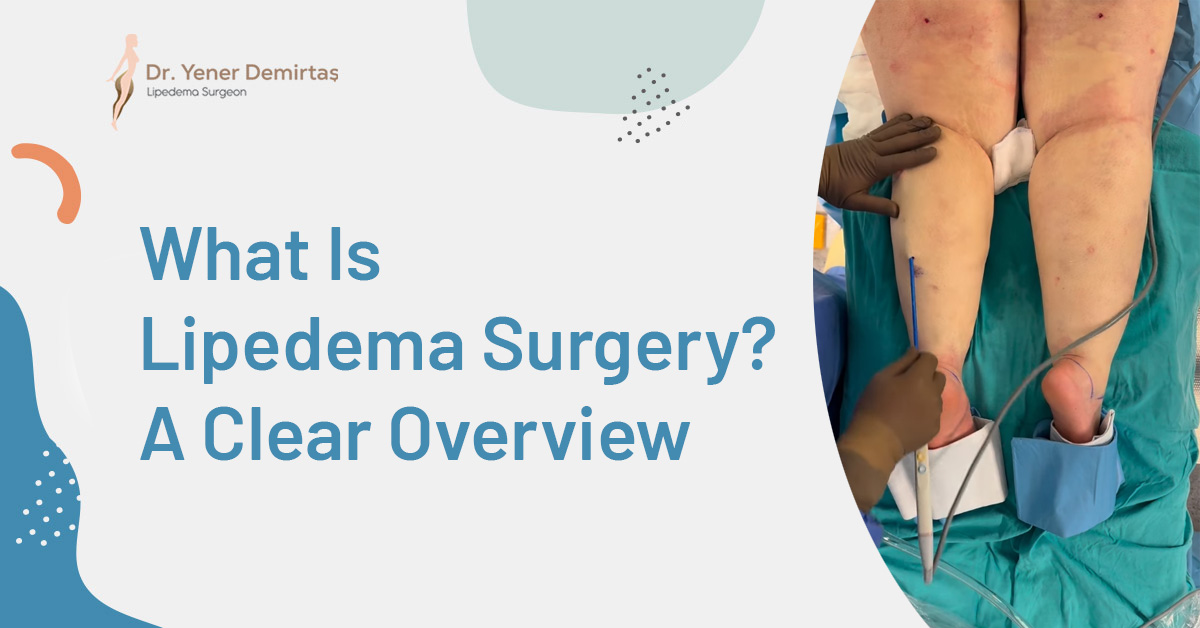
What Is Lipedema Surgery? A Clear Overview
What Is Lipedema Surgery?
Lipedema surgery is a specialized procedure designed to remove the abnormal fat tissue that accumulates in lipedema, a chronic condition that does not respond to diet or exercise. It addresses the root cause rather than the symptoms, and VASER liposuction is currently the most widely used surgical approach for this purpose.
Why Is Lipedema Different From Regular Fat?
Before understanding what lipedema surgery involves, it helps to understand why lipedema fat behaves so differently from ordinary body fat. Many patients arrive after years of dieting and exercising with no meaningful change in the affected areas. This is not a failure of willpower. It reflects a biological reality that is specific to lipedema tissue.
What Makes Lipedema Fat Resistant to Diet and Exercise?
In patients with lipedema, we observe that the fat tissue behaves differently from ordinary adipose tissue. The fat cells in lipedema-affected areas appear to be hormonally driven and structurally distinct. They do not respond to caloric restriction the way typical fat cells do. Weight loss achieved through diet may reduce fat in other areas of the body, but the lipedema tissue in the legs, hips, or arms tends to remain largely unchanged.
This is one of the most frustrating aspects of the condition for patients, and it is also one of the clearest indicators that a different approach is needed.
How Does Lipedema Progress Over Time?
Lipedema is a progressive condition. In earlier stages, the tissue may feel soft and the skin surface relatively smooth. As the condition advances, the tissue becomes denser and more painful, and the physical burden on the body increases. Understanding the stages of lipedema is important because the stage at which a patient is evaluated can influence the surgical plan.
Earlier intervention is generally associated with less complex tissue involvement, though each patient's situation is assessed individually.
What Happens to the Tissue in Later Stages?
In more advanced stages, fibrosis (hardening of the tissue due to excess connective tissue formation) can develop within the fat layer. The lymphatic system (the network that drains excess fluid from tissues) may also become involved, leading to a combined condition sometimes referred to as lipo-lymphedema. When fibrosis is present, the tissue becomes firmer and more difficult to treat, which is one reason why earlier evaluation is often recommended.
Clinical Note: In patients we evaluate at later stages, we frequently observe that the tissue has developed a nodular, fibrous quality that is distinctly different from the softer tissue seen in earlier presentations. This structural change is one of the factors considered when planning the surgical approach.
What Does Lipedema Surgery Actually Involve?
Lipedema surgery aims to remove the pathological fat tissue that has accumulated in affected areas. The goal is not cosmetic reshaping in the traditional sense. The procedure targets tissue that is causing pain, heaviness, restricted mobility, and psychological distress.
How Is VASER Liposuction Used in Lipedema Treatment?
VASER liposuction (Vibration Amplification of Sound Energy at Resonance) uses ultrasonic energy to break apart fat cells before they are removed. This approach is considered particularly suitable for lipedema surgery because it allows for more precise tissue targeting. One of the key goals is to minimize disruption to the lymphatic vessels that run through the fat layer, though outcomes depend on multiple factors including the patient's tissue characteristics and the surgeon's technique.
For a detailed discussion of what this procedure can and cannot achieve, the article on the benefits and risks of VASER liposuction in lipedema treatment covers this in depth.
How Is VASER Different From Traditional Liposuction?
| Feature | Traditional Liposuction | VASER Liposuction |
|---|---|---|
| Mechanism | Mechanical disruption of fat tissue | Ultrasonic energy emulsifies fat before removal |
| Tissue selectivity | Less selective | Aims to preserve surrounding structures |
| Lymphatic consideration | Higher mechanical trauma to vessels | Reduced mechanical trauma is targeted |
| Application in lipedema | Less commonly used for lipedema | Currently the preferred approach |
To understand the technical details of how this technology works in practice, the guide on how VASER liposuction works provides a comprehensive overview.
What Role Does the Surgeon's Technique Play?
The technology itself is only one part of the equation. The surgeon's familiarity with lipedema tissue, their approach to preserving lymphatic structures, and their experience with the specific challenges of fibrous or multi-stage tissue all influence what can be achieved. In our practice, the surgical technique is adapted to each patient's tissue characteristics rather than applied as a fixed protocol.
Is Lipedema Surgery Performed in One Session or Multiple?
This depends on the extent of the affected areas and the stage of the condition. Some patients may be candidates for a single surgical session addressing one or two regions. Others, particularly those with widespread involvement across the legs, hips, abdomen, and arms, may benefit from a staged approach with planned intervals between sessions.
Which Body Areas Are Typically Addressed?
The most commonly affected areas in lipedema include:
- Thighs and inner knees
- Lower legs and ankles
- Hips and buttocks
- Upper arms
- Abdomen (in some presentations)
For patients specifically dealing with lower limb involvement, the article on lipedema in the legs addresses the causes, symptoms, and management considerations in more detail. Each patient's surgical plan is determined individually based on their specific distribution and stage.
Who Is a Candidate for Lipedema Surgery?
Not every patient with lipedema will be immediately considered for surgery. Candidacy is evaluated based on a combination of clinical, diagnostic, and health-related factors.
Patients who may be evaluated for surgery: Those with a confirmed or strongly suspected lipedema diagnosis, documented lack of response to conservative treatments (compression therapy, manual lymphatic drainage, dietary management), stable general health, and realistic expectations about what surgery can address.
What Criteria Are Typically Evaluated Before Surgery?
Before a surgical plan is considered, several factors are assessed. These typically include the confirmed diagnosis and stage of lipedema, the patient's overall health and any conditions that may affect surgical risk, whether conservative treatments have been attempted, and the specific areas and volume of tissue involved. A thorough understanding of how lipedema is diagnosed is part of this evaluation process.
Can Women Who Have Tried Everything Else Still Benefit?
Many patients who reach a surgical consultation have already spent years trying diets, exercise programs, compression garments, and lymphatic drainage therapy. In these patients, we often observe that conservative measures have helped manage symptoms to some degree but have not addressed the underlying tissue. Surgery may be considered as the next step in their care, provided they meet the clinical criteria for the procedure.
The goal is not to replace conservative care but to address what conservative care cannot.
What Should You Discuss With Your Surgeon at the First Consultation?
A first consultation is an opportunity to share your full history and ask the questions that matter most to you. It is helpful to bring information about:
- When your symptoms began and how they have changed over time
- Which areas are most affected and most painful
- What treatments you have already tried and their outcomes
- Any relevant medical history, medications, or previous surgeries
- Your questions about the procedure, recovery, and realistic expectations
If you would like to find out whether you may be a candidate, you are welcome to submit an evaluation request to begin the process.
Frequently Asked Questions About Lipedema Surgery
Is lipedema surgery the same as cosmetic liposuction?
No. Lipedema surgery and cosmetic liposuction share some technical similarities, but they are fundamentally different in purpose and approach. Cosmetic liposuction is performed to reshape areas of ordinary fat for aesthetic reasons. Lipedema surgery targets pathological fat tissue that causes pain, heaviness, and functional limitation. The surgical technique, the depth of tissue addressed, and the care taken to preserve lymphatic structures are all adapted to the specific demands of lipedema tissue. The medical indication is also distinct: lipedema surgery is performed to treat a recognized chronic condition, not to alter appearance.
Does lipedema come back after surgery?
The fat cells removed during surgery do not regenerate. However, lipedema is a systemic condition influenced by hormonal and genetic factors, which means that ongoing attention to lifestyle, compression, and lymphatic health remains important after surgery. The aim is to reduce the volume of pathological tissue and improve quality of life, while supporting long-term outcomes through continued conservative care. Recurrence risk can be minimized with appropriate post-operative management, though no surgical outcome can be guaranteed.
How long does recovery take after lipedema surgery?
Recovery timelines vary depending on the extent of the procedure and the areas treated. In general terms, most patients are able to resume light daily activities within one to two weeks. Compression garments are typically worn for several weeks post-operatively to support healing and lymphatic function. Manual lymphatic drainage (a gentle massage technique that supports fluid movement through the lymphatic system) is often recommended as part of the recovery protocol. More physically demanding activities are usually reintroduced gradually over the following weeks. Each patient's recovery plan is tailored to their specific procedure and health status.
Is it possible to have lipedema surgery in Istanbul?
Yes. Lipedema surgery using VASER liposuction is performed in Istanbul, and the city has become an increasingly recognized destination for patients traveling internationally for this procedure. The evaluation process can begin remotely: patients are typically asked to share their medical history, relevant imaging, and a description of their symptoms before an in-person consultation is scheduled. If you are considering treatment in Istanbul and would like to understand whether you may be a suitable candidate, you are welcome to submit an evaluation request to begin the assessment process.